Basement insulation
Insulate your basement walls and rim joist to stop the cold and damp from entering the living space above.
Learn more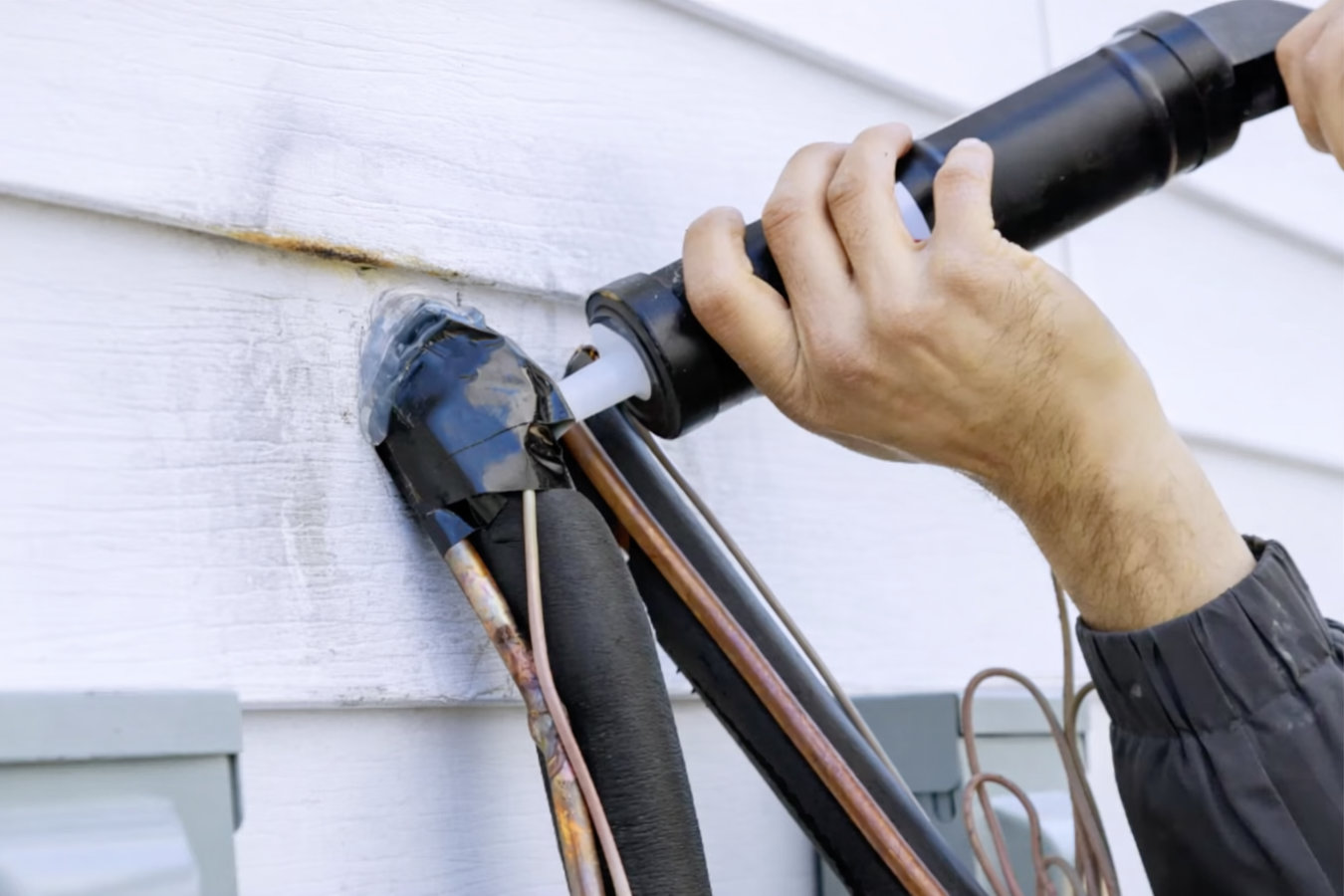
Insulation slows heat loss, but hidden air leaks keep driving your bills up regardless. We find and seal them so your heating and cooling system can actually do its job.
Air sealing in Corvallis means finding and closing the gaps, cracks, and hidden openings where outside air sneaks in and your heated air leaks out - most jobs on a single-family home take one to two days and target the attic, basement, and crawl space where most leaks concentrate.
Insulation slows heat transfer through solid surfaces. But it does nothing about moving air. If your attic has gaps around wiring and pipes, or your rim joist is unsealed, or there are openings around recessed lights in the ceiling, warm air is quietly pouring out of your home every hour the heat runs. Air sealing closes those pathways permanently. It works best alongside basement insulation and attic air sealing as part of a whole-house approach.
Corvallis homes built before 1990 are especially prone to this problem. Tight construction was not standard then, and decades of small repairs and renovations add new penetrations without closing the old ones. The result is a home that leaks far more than it looks like it should.
Corvallis winters are damp and cool from October through April - not brutally cold, but persistent. If your gas or electric bill climbs noticeably each fall and you have not changed your habits, air leaks are a likely cause. Your system is working harder than it should because conditioned air is escaping through gaps you cannot see.
If one bedroom always feels colder in winter, or a corner of your living room has a persistent chill even with the heat running, outside air is finding its way in nearby. This is common in older Corvallis homes where attic insulation has settled, leaving gaps around ceiling fixtures or at the top of interior walls.
Hold your hand near an electrical outlet on an outside-facing wall on a cold day. If you feel a faint draft, that outlet connects to a gap running to the outside. Similarly, if your attic hatch does not sit flush or has no weatherstripping, it is one of the biggest single leak points in the house.
Corvallis gets a lot of rain, and humid outdoor air finding its way in can cause moisture problems over time. Condensation on the inside of windows, a musty smell from the attic hatch, or moisture staining on attic sheathing all indicate warm interior air is meeting cold surfaces through gaps it should not be passing through.
We start every air sealing job with a blower door test - a diagnostic tool that depressurizes the house and makes air leaks visible and measurable. This is not optional for us. Skipping it and just applying foam in obvious spots is guesswork. The test tells us exactly where the biggest problems are so we can target them first and confirm the work was effective afterward. We use spray foam, caulk, and weatherstripping depending on the gap size and location - the right material for each type of opening rather than one solution applied everywhere. The work pairs well with attic air sealing when the attic floor has multiple penetrations from wiring, pipes, and old HVAC equipment.
Most of the work happens in the attic, basement, and crawl space - the areas where air leakage concentrates. Your living areas stay largely undisturbed. Once sealing is complete, we run the blower door test again so you can see the before-and-after numbers, not just take our word that the job was done. We also assess your home ventilation as part of every job to confirm that tightening the envelope does not create air quality concerns.
Best for homes where wiring, pipes, and HVAC equipment pass through the attic floor with unsealed gaps.
Best for homes with uninsulated or unsealed wood framing just above the foundation where cold air enters freely.
Best for homes with accessible crawl spaces that allow damp outdoor air to enter the living area above.
Best for older Corvallis homes with multiple leak sources throughout the attic, walls, and basement.
Corvallis sits in the Willamette Valley and receives around 45 inches of rain a year, with a long wet season that runs from October through April. Air leaks here do not just let in cold air - they let in humid air that can slowly damage insulation, wood framing, and drywall over months of rain. That makes air sealing more than a comfort upgrade in this climate. It is a way to protect the structure of the house from the kind of slow moisture damage that is easy to miss until it becomes expensive.
The neighborhoods near Oregon State University and south Corvallis have a high concentration of homes built in the 1950s through 1970s - well before tight construction became standard. These homes often have unsealed attic penetrations, open rim joists, and gaps around old plumbing and wiring that have accumulated over decades. Homeowners in Woodburn and Monmouth face the same conditions, and we serve all of these communities with the same diagnostic approach.
Energy Trust of Oregon rebates for air sealing are available to most Corvallis homeowners through Pacific Power. The work must be done by a trade ally contractor to qualify. Ask us about current rebate amounts before you schedule - the rebate process is straightforward when the paperwork is handled correctly from the start. Energy Trust of Oregon
We ask your home age, whether you have noticed specific drafts or high bills, and if you have had any prior insulation work done. We reply within 1 business day and schedule a separate in-home assessment visit - no commitment required.
We walk your attic, basement, and crawl space, then run a blower door test to measure actual leakage and locate the biggest problem areas. This takes about an hour. You receive a written estimate that explains what we found, where we will work, and what it will cost.
Clear access to your attic hatch, basement stairs, and crawl space entry. Most of the work stays out of your living areas. The crew uses foam, caulk, and weatherstripping to close off the gaps identified in the assessment. Most jobs finish in one to two days.
We run the blower door test again after the work is done to confirm the leakage rate dropped. You see the before-and-after numbers. If your project qualifies for Energy Trust rebates, we typically handle the paperwork submission on your behalf.
Experienced local crews familiar with Energy Trust of Oregon rebates. Free estimates, no pressure.
(541) 243-1620We measure your home leakage rate before we start and again after we finish. That is your proof the job worked - a number you can see, not a claim you have to trust. Contractors who skip this step have no way of knowing whether the work made a meaningful difference.
Our crews have years of hands-on experience air sealing Corvallis-area homes. We document the work we complete and back the results with blower door numbers - so you get proof the job worked rather than a handshake agreement.
We work throughout Corvallis and the Willamette Valley, from Salem and Albany to Newport and beyond. Local service means no inflated travel costs and a crew familiar with the specific housing stock and climate conditions in this region.
A tighter home needs a plan for fresh air exchange. We assess your ventilation as part of every air sealing project and flag any issues before we finish the work. You get a well-sealed home that still breathes properly - not one that trades drafts for stuffiness.
Air sealing is one of the most impactful things you can do to improve a home in the Willamette Valley, and the results are measurable rather than estimated. We show you the numbers before and after so you know exactly what the work accomplished. Building Performance Institute
Insulate your basement walls and rim joist to stop the cold and damp from entering the living space above.
Learn moreTarget the attic floor specifically - where wiring and pipes create the most common and highest-impact leak points.
Learn moreCorvallis rainy season arrives every October - seal up before your heating bills climb this fall.