Crawl Space Vapor Barrier
Address moisture entering from below the house at the same time you seal the attic above - a common pairing in Corvallis homes with vented crawl spaces.
Learn more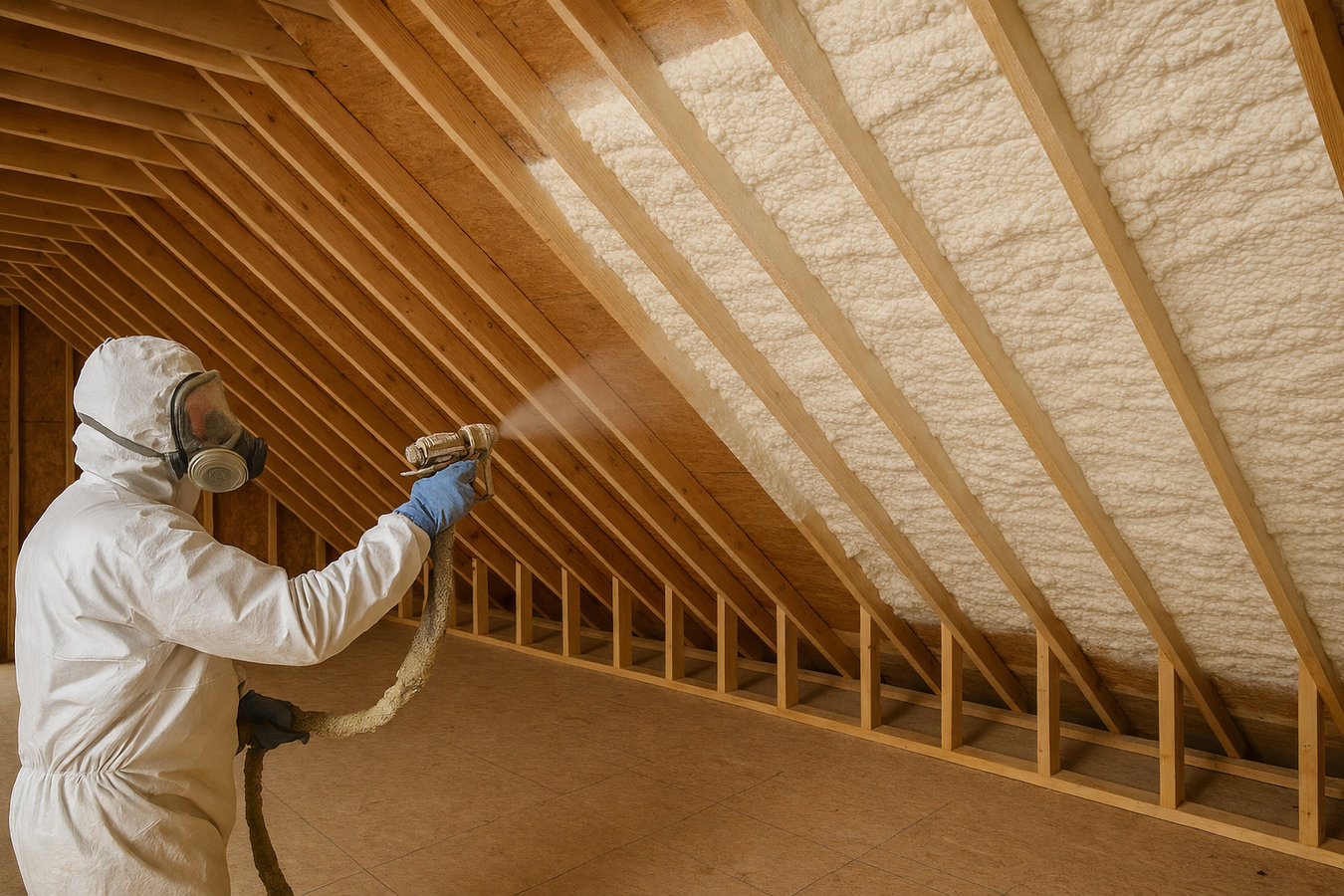
Heat escapes through attic gaps year after year - sealing those gaps is often the highest-return energy improvement a Corvallis homeowner can make.
Attic air sealing in Corvallis finds and plugs the gaps in your attic floor that let heated air escape into the attic and out of your home - most jobs are completed in a single visit, with results that show up on the next heating bill.
Adding more insulation is not always the answer. Insulation slows heat transfer through solid surfaces, but it cannot stop air from moving through gaps. Attic air sealing closes those pathways first, so whatever insulation you have - new or existing - can actually do its job. If you are also considering upgrading your insulation layer, combining air sealing with our crawl space vapor barrier service or with a full air sealing services project gives you the most complete improvement.
In Corvallis, where heating season runs roughly October through April and many homes date from the 1950s through 1970s, unsealed attics have often been leaking heat for decades without any action being taken. This service is one of the most cost-effective improvements available to older-home owners in the Willamette Valley.
If your gas or electric bill during Corvallis's long rainy season feels high compared to what neighbors with similar homes pay, air leaks in the attic are one of the most common culprits. Heat rises, and if gaps are present above your ceiling, warm air is escaping into the attic all winter. This is especially common in homes built before the 1990s, a large share of Corvallis's housing stock.
If a bedroom or hallway near the attic hatch always feels a few degrees colder than the rest of the house, conditioned air is likely escaping nearby. Air leaks tend to concentrate around recessed lights, ceiling fans, and the tops of interior walls. A slight musty or dusty smell in those areas can mean attic air is being pulled down into your living space.
The attic access panel is one of the most commonly overlooked air leak points in any home. If you feel cool air coming down around the hatch edges on a cold Corvallis morning, or the hatch itself feels cold to the touch, that opening is almost certainly unsealed. This is one of the easiest fixes and one of the most impactful for immediate comfort.
In Corvallis's wet climate, warm moist air from your living space can travel up through ceiling gaps and condense on cold attic surfaces, eventually working its way back down. Unexplained moisture on interior windows or a musty smell in rooms below the attic often means air is moving through your ceiling in ways it should not - and sealing those pathways breaks the cycle.
We perform attic air sealing as a standalone service or as part of a larger insulation project. Working from inside the attic space, we apply foam, caulk, or specialized tape around every penetration we find - plumbing pipes, wiring chases, recessed light fixtures, the tops of interior walls, and the attic hatch itself. None of this work disturbs your ceilings or walls. If your existing insulation is thin or damaged, we can combine the sealing work with our crawl space vapor barrier service to address moisture from below at the same time.
For homeowners who want a whole-home approach, we pair attic air sealing with our broader air sealing services, which covers rim joists, crawl spaces, and other areas where air movement is driving up your heating costs. Every project includes a written scope, a permit where Oregon code requires one, and documentation to support your Energy Trust of Oregon rebate claim if you qualify.
Best for homeowners whose heating bills seem high and whose homes were built before modern energy codes - the most common scenario across older Corvallis neighborhoods.
Ideal for homeowners who feel drafts around the attic access panel - often the single most impactful fix for cold spots near hallways and bedroom ceilings.
Suits older homes with recessed lights that were never sealed - each fixture can be a significant air leak path directly into the attic.
For homeowners who want to seal gaps and upgrade insulation in a single project - delivering better results than either scope alone.
Corvallis sits squarely in the Willamette Valley, where heating season runs nearly half the year - roughly October through April. That is a long stretch when unsealed attics are actively costing homeowners money every single day. Many homes in established Corvallis neighborhoods like South Corvallis, Timberhill, and the areas surrounding Oregon State University were built in the 1950s through 1980s, before air sealing requirements existed. Those homes often have gaps around original plumbing, wiring chases, and older light fixtures that have simply never been addressed. Homeowners who seal their attics before the rainy season begins in fall tend to see the most immediate impact on both their comfort and their heating bills.
The wet climate adds another dimension beyond energy savings. When warm indoor air moves up through attic gaps, it can interact with cooler, damper attic air and create conditions where moisture accumulates over time. Sealing those pathways protects your attic structure, not just your energy budget. We regularly work with homeowners in Monmouth and Dallas, where older housing stock and the same Willamette Valley climate create the same pattern of unsealed attics losing heat quietly for decades.
The Energy Trust of Oregon offers rebates for qualifying air sealing and insulation projects, and most Corvallis homeowners served by Pacific Power are eligible. The U.S. Department of Energy estimates that sealing air leaks throughout a home can reduce heating and cooling costs by 10 to 20 percent per year - a number that reflects how significant this often-overlooked work actually is.
Tell us a bit about your home - age, any comfort or billing issues, and whether you have had previous insulation work done. We reply within one business day and can usually schedule an initial visit within the week at no charge.
We spend 30 to 60 minutes in your attic looking at existing insulation, penetration types, moisture conditions, and ventilation. You just need the attic hatch accessible - we handle everything else and give you a written estimate after.
You receive a written quote that explains what we found and why we are recommending what we are recommending. This is the right moment to ask about Energy Trust of Oregon rebates - we will tell you upfront whether your project qualifies.
The crew works entirely in the attic - typically two to five hours. You do not need to leave the house. At close-out we walk you through what was sealed and provide rebate documentation if your project qualifies.
Free estimate. We handle permit paperwork and help you access Energy Trust rebates - no extra effort on your part.
(541) 243-1620Our crews have years of hands-on experience air sealing attics in Corvallis-area homes. We document the work we complete and do a final walkthrough with you, so you have a clear record of exactly what was sealed and where - not just a verbal assurance.
We serve all 12 communities in our service area, from Corvallis to Salem, Newport, and beyond. Working across the Willamette Valley regularly means we understand how this climate's wet winters and older housing stock interact - and how to seal attics correctly for moisture management, not just energy savings.
Poor attic air sealing misses the tops of interior walls, recessed light fixtures, and the attic hatch - the spots most often skipped on rushed jobs. We address all of these as a matter of course, and we are happy to provide photos of the completed work so you can see exactly what was sealed.
Energy Trust of Oregon offers cash back for qualifying air sealing and insulation projects, and many Corvallis homeowners leave that money unclaimed. We provide all the documentation at project close-out, so getting the rebate requires no extra work on your end.
Attic air sealing done right requires knowing what to look for and being thorough about every penetration type - not just the obvious ones. That attention to detail is what separates a job that actually moves your energy bills from one that does not.
Address moisture entering from below the house at the same time you seal the attic above - a common pairing in Corvallis homes with vented crawl spaces.
Learn moreWhole-home air sealing covering rim joists, crawl spaces, and other leakage points beyond the attic floor for a more complete thermal envelope.
Learn moreEvery week of delay is another week of heat - and money - leaving through your ceiling. Call today for a free estimate and let us show you what your attic is actually losing.