Spray Foam Insulation
Spray foam that seals air leaks and insulates in a single application - commonly used in commercial roof assemblies and around structural penetrations.
Learn more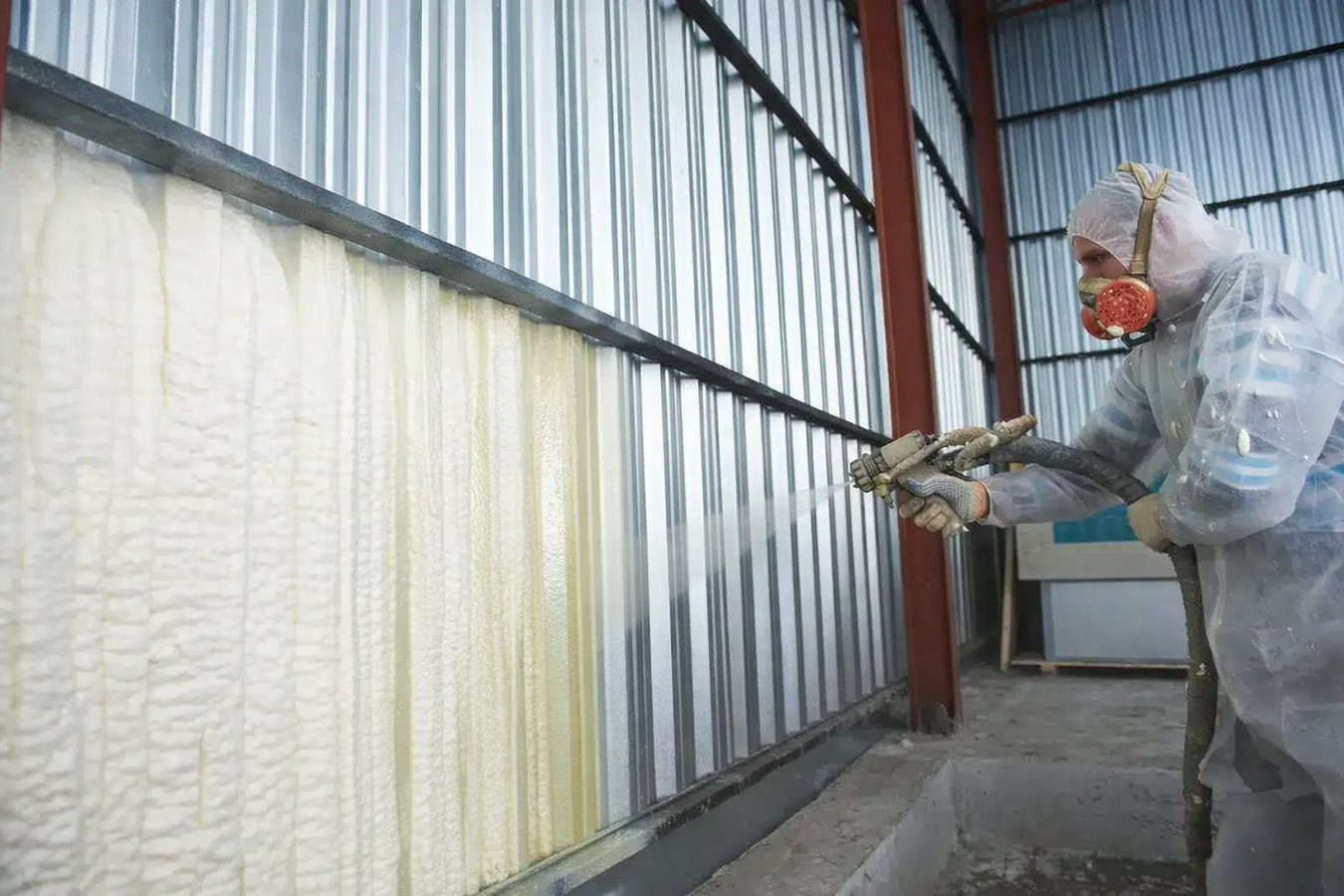
Under-insulated commercial buildings in Corvallis pay too much to heat a six-month rainy season. Professional insulation upgrades lower bills, improve comfort for staff and customers, and meet Oregon code.
Commercial insulation in Corvallis slows heat transfer through your building's walls, roof, and floors so your heating system runs less and your bills come down - most projects are permitted, inspected, and completed within one to two weeks depending on building size. Whether the work involves blown-in material in an accessible attic, spray foam around penetrations and joints, or rigid board added to walls, the result is the same: a building that holds heat the way it is supposed to.
A significant share of Corvallis commercial buildings - particularly those near downtown and the Oregon State University campus - were built in the 1960s through 1980s, before Oregon's current energy codes took effect. Many of these buildings have little or no wall insulation, and their attic insulation has settled and thinned over decades. If your building falls into that category, it is almost certainly operating at a performance level well below what Oregon now requires - and an upgrade will deliver a noticeable improvement in both comfort and operating costs.
Commercial insulation upgrades often incorporate spray foam insulation in areas where air sealing and insulation need to happen together - particularly around roof penetrations and wall joints where air leaks are most common in older commercial construction.
If your energy costs climb sharply when Corvallis's rainy season begins in October and do not come back down until April, under-insulation is one of the most common causes. A building that holds heat efficiently runs its heating system far less. If you have noticed this pattern for more than one winter, it is worth having someone take a look at what is actually in the walls and ceiling.
Drafty corners, cold areas near exterior walls, or rooms that never seem to reach a comfortable temperature are classic signs that insulation is missing or degraded in those areas. In older Corvallis commercial buildings - especially those built before the 1990s - it is common to find exterior walls that were never insulated at all, or attic insulation that has settled well below effective depth.
If you can feel a draft near an electrical outlet on an exterior wall, see light coming through gaps around pipes or wires, or notice moisture forming on interior wall surfaces during cold weather, air is moving through your building envelope in ways it should not be. These are signs that both insulation and air sealing are needed - and they often appear together in buildings more than 20 years old.
When a heating or cooling system runs almost nonstop but the building still does not reach a comfortable temperature, the system is compensating for heat loss through poorly insulated walls or ceilings. Before replacing expensive HVAC equipment, it is worth confirming that the building envelope is doing its job - because no HVAC system can fully overcome a building that is leaking heat through every exterior surface.
Every commercial project starts with an on-site assessment - not a phone quote. We walk through your building, look at the existing insulation in accessible areas, and check for obvious gaps and problem spots. We may use a thermal camera to find hidden air leaks that you cannot see from inside the building. After the visit, you receive a written estimate that explains what we recommend, why, and what it will cost - with permit and utility rebate details included. For projects involving spray foam insulation, we coordinate the schedule around your business operations so spray-treated areas can be vacated and re-occupied with minimal disruption.
We handle the permit process through the City of Corvallis Building Division and coordinate the required inspection so you do not have to navigate that yourself. For buildings where air sealing is needed alongside insulation, we address both in the same project - gaps around pipes, electrical boxes, and structural joints that let air bypass even well-installed insulation. We also install wall insulation in commercial buildings where exterior walls were never insulated or where original material has degraded beyond effective performance.
Suits office buildings, retail spaces, and warehouses where the attic or roof assembly is the primary source of heat loss - blown-in or rigid board installed to current Oregon code minimums.
Suits buildings where air sealing and insulation need to happen together, particularly around roof penetrations, wall joints, and mechanical room assemblies.
Suits older Corvallis commercial buildings with uninsulated or under-insulated exterior walls - material injected or installed to improve the building envelope without full wall demolition.
Suits building owners who want an honest evaluation of their current envelope performance before committing to any scope of work or utility rebate application.
Corvallis sits in the Willamette Valley and receives roughly 50 inches of rain per year, with a heating season that runs from October through April - six months of sustained pressure on your building envelope. Buildings that are under-insulated spend heavily on natural gas or electric heat during those months, and the damp climate means moisture management is not optional. Insulation installed without proper attention to vapor control can trap moisture inside walls over time, leading to mold and structural damage that costs far more to fix than the insulation upgrade would have. Commercial building owners in Salem and across the Willamette Valley face these same conditions and are using the same utility rebate programs.
Oregon's commercial energy code is among the more demanding in the country, and Corvallis enforces it. Any permitted insulation work must meet current standards, not the standards in place when your building was originally constructed. For buildings more than 10 to 15 years old, a code-compliant upgrade almost always delivers a meaningful improvement over what is already there. Pacific Power and NW Natural both offer rebate programs for commercial customers who upgrade insulation, but these programs typically require pre-approval before work begins. Businesses in Albany are in the same utility service territories and can access the same programs. A contractor who knows the local utility process handles the pre-approval paperwork as part of the project so you do not miss a deadline.
We ask a few basic questions - building size, type, and what areas you are concerned about. This helps us come prepared for the site visit. We schedule a walkthrough and reply within 1 business day of your initial inquiry.
We walk through your building, check existing insulation, and use a thermal camera if needed to find hidden air leaks. After the visit you receive a written estimate covering scope, materials, permit costs, and total price - no guessing after work starts.
For most commercial insulation work in Corvallis, a building permit is required. We pull the permit from the City of Corvallis Building Division on your behalf. If you plan to apply for Pacific Power or NW Natural rebates, pre-approval paperwork is submitted at this stage - not after the job is done.
The crew installs the insulation with minimal disruption to your operations. After installation, a city inspector verifies the work meets Oregon's commercial energy code. We coordinate the inspection scheduling. Once the inspector signs off, any opened walls or ceilings are closed and finished.
Written quote. Permit guidance included. No obligation.
(541) 243-1620Our crews have years of hands-on experience insulating commercial buildings across the Corvallis area. We document the work we complete and stand behind it - and for commercial projects where the work must pass a city inspection, that experience and accountability matter.
Commercial insulation work in Corvallis requires a building permit, and we pull it on your behalf before work begins. The finished installation is inspected by the City of Corvallis Building Division. That inspection record protects you if you ever sell, lease, or insure the property - and it confirms the work meets Oregon's current energy standards, not the lower standards from when the building was first constructed.
Pacific Power and NW Natural both serve the Corvallis area and offer rebate programs for commercial insulation upgrades - but most require pre-approval before work starts. We are familiar with both programs and handle the pre-approval paperwork as part of the project planning process. Missing a rebate deadline because of a paperwork gap is an avoidable outcome.
Corvallis receives around 50 inches of rain per year, and insulation installed without moisture management in mind can trap water inside walls - leading to mold and structural damage years later. We address vapor control as part of every commercial insulation project, not as an optional add-on. The EPA guidance on spray polyurethane foam covers how different insulation types interact with moisture in climates like the Willamette Valley.
Permit compliance, utility rebate handling, documented work, and moisture management are not extras - they are how commercial insulation is supposed to be done. Every project we take on in Corvallis is built around those fundamentals.
Permit requirements and energy code details are available from the City of Corvallis Building Division. Utility rebate programs are detailed at Pacific Power Business Rebates.
Spray foam that seals air leaks and insulates in a single application - commonly used in commercial roof assemblies and around structural penetrations.
Learn moreInsulation added to existing exterior walls in commercial buildings where original construction left wall cavities empty or under-filled.
Learn moreCorvallis's rainy season starts in October. Lock in your project now - utility rebate pre-approvals need to be submitted before work begins, not after.